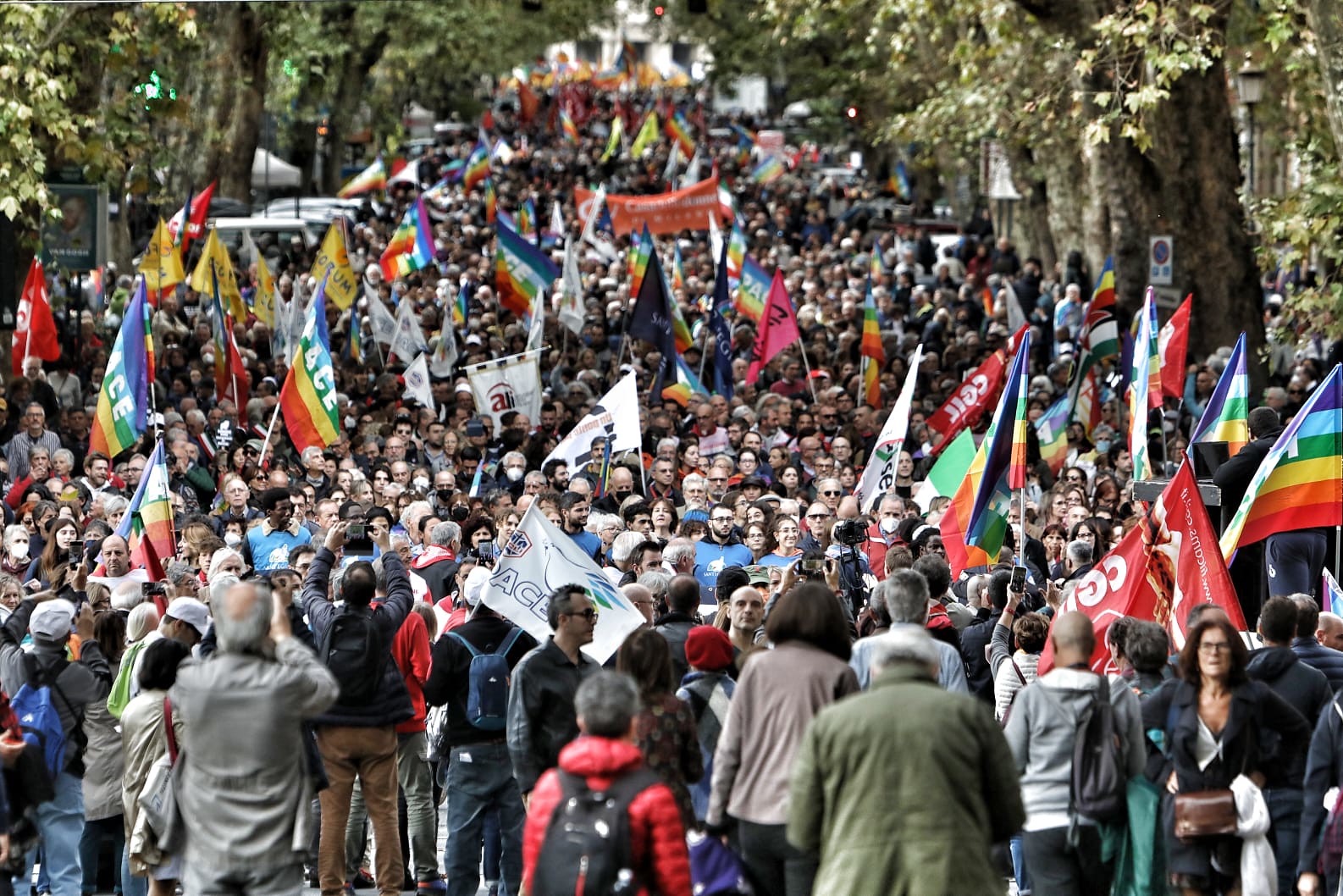
On Sunday, June 14, the European march “Welfare, not Warfare” (“Social Justice, Not War”) will take place in Brussels, organized by the Belgian group Stop Militarisation and the European coalition Stop ReArm Europe. At the same time, peace demonstrations will be held in other major European cities. On June 20, an international anti-war conference will take place in London.
What is significant about these activities, in which many thousands of people will demonstrate their commitment to peace, is their broad political scope. Trade unionists from the Italian CGIL, the Spanish workers’ commissions CCOO, and the French CGT will be present, as well as left-wing parties from across Europe. Of course, the member organizations of the FIR are also taking to the streets in every country. This movement reflects a European mobilization that was already evident in late March during the major actions in Rome and London against U.S. war policy. On May 8, there were school strikes in Germany against military conscription. Now, in June, there are actions across the entire continent, all the way to Greece. Something is stirring in Europe, and that is necessary.
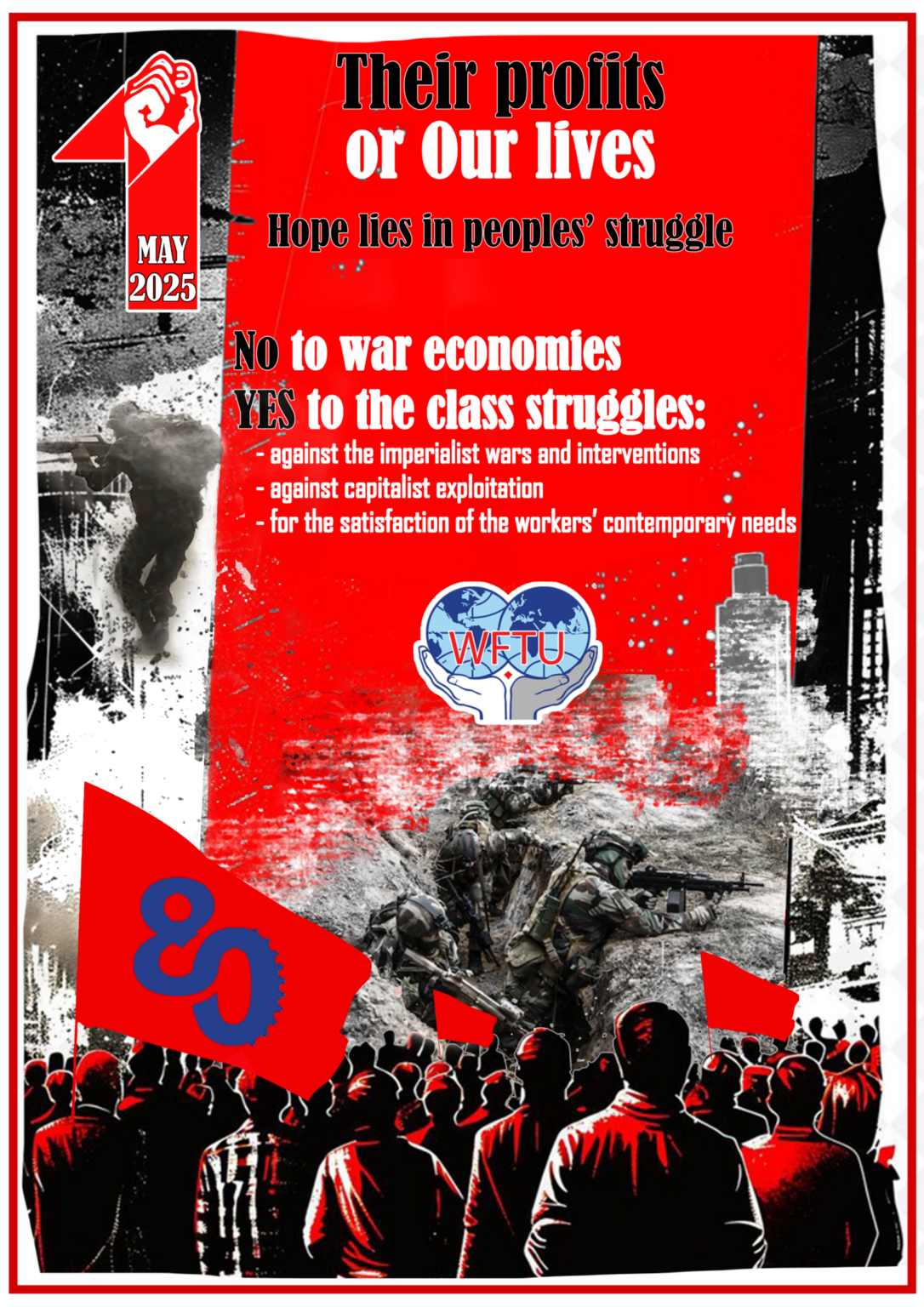
A central message is: “We won’t pay for your wars!” The protests are directed against the increase in military spending planned in all NATO countries, as well as the 800 billion euros earmarked under the European Commission’s ReArm Europe plan. This massive spending lowers the expense of basic social services, education, and healthcare. Consequently, many actions demonstrate a direct connection between the demands of the peace movement, social organizations, and trade unions.
Equally significant is the international networking of movements against rearmament and war. The conference in London makes an important contribution to this. Hundreds of people will come from all over Europe to participate in the discussions. There will not only be important analyses; the aim is to come together here and engage in serious strategic discussions on how the anti-war movement across Europe and beyond can collaborate and take concrete steps, according to a call to action.
While those in power—despite tensions, as seen in the Franco-German FCAS war project—are coordinating their arms efforts internationally, the anti-war movement must also organize internationally. For all the issues of the peace movement and the broader political crises—such as the climate catastrophe and the rise of the far right in various countries—can only be addressed collectively and at the international level. Whether this requires a new political network at the European level or whether existing forces must cooperate more closely is a strategic question that needs further debate.
The FIR and its member organizations are, of course, interested in actively contributing within this framework, using the resources at their disposal, as a force that has advocated for peace and disarmament since its founding 75 years ago. It is our historical experiences and the slogan “Never again fascism! Never again war!”—which the survivors and today’s anti-fascists stand for—that are also significant for the anti-war movement. What matters is how we succeed in “translating” this slogan from 1945 for today’s generations, making them understand that anti-fascist remembrance policy is always linked to political action for today and tomorrow.
But in this regard, we can be optimistic. Many young people are actively opposing the reintroduction of conscription or other forms of compulsory military service. They advocate for adequate funding for schools and universities and oppose the militarization of even universities; they are committed to fighting the system of corruption in arms financing and other schemes; and they show a great willingness to engage with countries and peoples affected by war, particularly in solidarity with Palestine.
It is a challenge, but also an obligation for the FIR and its member federations, to remain in dialogue with these young people in the movement and to discuss the upcoming political challenges together with them. Then we can take our vision of a “new world of peace and freedom” one step forward.